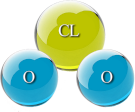
Chemical and Physiological Distinction between Chlorine Dioxide (ClO₂) and Chlorite (ClO₂-) in the Therapeutic Context of CDS.
Chemical and Physiological Distinction between Chlorine Dioxide (ClO₂) and Chlorite (ClO₂⁻) in the Therapeutic Context of CDS
Dr. h.c. Andreas Ludwig Kalcker
Abstract
Chlorine dioxide (ClO₂) and the chlorite ion (ClO₂⁻) are related chemical species with significantly different chemical and biological properties. In the therapeutic context of CDS (chlorine dioxide solution dissolved in water), understanding these differences is crucial for accurately assessing its stability, absorption, distribution, and mechanism of action. Contrary to popular claims suggesting rapid conversion of ClO₂ to ClO₂⁻ upon ingestion, chemical, kinetic, and physiological evidence indicates that this reduction does not occur under normal gastrointestinal conditions. This article reviews the chemical, kinetic, and biological foundations that highlight the superiority of molecular ClO₂ in medical applications.
1. Introduction
The therapeutic applications of chlorine dioxide have sparked debate, particularly regarding its potential transformation into chlorite upon ingestion. Given that both species exhibit distinct oxidative properties, reactivities, and toxicological profiles, this article addresses these differences from a chemical-academic perspective, establishing the basis for the safe and effective use of CDS.
2. Chemical and Structural Nature
2.1 Chlorite (ClO₂⁻)
Chlorite is a polyatomic ion with a negative charge, where chlorine exhibits an oxidation state of +3. It is diamagnetic and has a stabilized electronic structure, with a standard reduction potential of approximately 0.95 V in acidic media, according to the reaction:
ClO₂⁻ + 4H⁺ + 4e⁻ → Cl⁻ + 2H₂O
Its oxidative reactivity is moderate and selective, with slow kinetics in interactions with biomolecules under physiological conditions.
2.2 Chlorine Dioxide (ClO₂)
Chlorine dioxide is a neutral, paramagnetic molecule with an unpaired electron and chlorine in an oxidation state of +4. Its standard reduction potential is significantly higher (approximately 1.6 V in acidic media for the reaction ClO₂ + e⁻ → ClO₂⁻), conferring high oxidative capacity and rapid reactivity with biological functional groups, such as thiols (-SH).
2.3 Key Differences
- Paramagnetism: ClO₂ is paramagnetic; ClO₂⁻ is diamagnetic.
- Permeability: The neutral, liposoluble ClO₂ crosses biological membranes more easily than the charged, hydrophilic ClO₂⁻ ion.
- Solubility and Stability: ClO₂ exhibits high solubility in water and stability under certain pH conditions, remaining molecular without ionizing.
3. Behavior in Acidic Media (Gastrointestinal Tract)
The rapid conversion of ClO₂ to ClO₂⁻ in the stomach is not kinetically favored due to the absence of potent reducing agents and specific conditions required for the redox reaction. In contrast:
- MMS (Miracle Mineral Solution): Contains NaClO₂, which, when activated with acid, generates ClO₂ in situ, releasing gas that may irritate mucous membranes and produce toxic byproducts like chlorate (ClO₃⁻).
- CDS: Contains stable, dissolved molecular ClO₂, without abrupt gas release or significant formation of toxic byproducts during gastric transit.
Experimental studies confirm the molecular stability of ClO₂ in aqueous solutions at acidic pH for durations compatible with gastrointestinal absorption.
4. Absorption and Systemic Distribution
The neutral and liposoluble nature of ClO₂ allows it to cross cellular barriers more efficiently than the hydrophilic chlorite ion. Partial distribution of molecular ClO₂ in plasma has been observed before its reduction in specific tissues, a process that does not occur immediately or completely in the digestive tract. This property enhances its direct therapeutic action against pathogenic microorganisms and biofilms, where chlorite exhibits lower efficacy due to limited penetration and reactivity.
5. Therapeutic Implications
The selective oxidative action of ClO₂ targets specific microbial functional groups without significantly affecting healthy human cells, thanks to the robust endogenous antioxidant system (glutathione). Additionally:
- The stability of ClO₂ in CDS minimizes the formation of toxic byproducts.
- Its toxicological profile at low concentrations is favorable.
- Chlorite requires higher concentrations for similar effects, increasing the risk of toxicity.
These characteristics position molecular ClO₂ as a superior therapeutic tool compared to chlorite.
6. Chemical Experimental Evidence
- Stability: ClO₂ in aqueous solution has a sufficient half-life for absorption before significant reduction.
- UV-Vis Spectroscopy: The characteristic peak at 360 nm confirms the molecular presence of ClO₂, distinct from the 260 nm peak associated with ClO₂⁻.
- Thermodynamics: Spontaneous reduction of ClO₂ to ClO₂⁻ in gastric media is not favored; acids may even promote reverse oxidation, as seen in MMS.
7. Conclusion
The common claim of rapid conversion of ingested chlorine dioxide to chlorite lacks robust chemical and physiological evidence. CDS, containing stable molecular chlorine dioxide, offers significant advantages for therapeutic applications due to its ability to cross membranes, remain active in acidic media, and act as a selective oxidant. Medical professionals and scientists are encouraged to consider these chemical foundations for a rigorous evaluation of the clinical use of CDS.