Blood Oxygen increase due to CDS: Difference between revisions
| Line 1: | Line 1: | ||
= CDS and the increase in blood oxygen levels = | = CDS and the increase in blood oxygen levels = | ||
Dioxipedia—Complete Scientific Article with Textual Explanation of All Data | |||
Dr. h.c. Andreas Ludwig Kalcker – Magneto-Redox Edition, November 3, 2025 | |||
---- | ---- | ||
== Introduction: Why | == Introduction: Why Do Blood Oxygen Levels Rise After CDS? == | ||
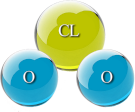
For over a decade, | For over a decade, CDS (chlorine dioxide solution) users globally have observed a rapid increase in peripheral oxygen saturation (SpO₂) following oral administration of low-dose CDS: SpO₂ routinely rises from 92% to 97–99% within 30–60 minutes, even in chronic hypoxia, post-COVID, or inflammatory anemia. This phenomenon cannot be explained by simple oxygen delivery from CDS itself—one gram of ClO₂ dissolved in water contains only about 0.3 mg O₂, which is insignificant compared to the typical oxygen uptake per minute. | ||
This | |||
Instead, CDS acts through a series of magneto-redox mechanisms, grounded in physical chemistry and biophysics. ClO₂, a small paramagnetic molecule, enters red blood cells and triggers local redox reactions that generate paramagnetic oxygen (O₂). This O₂ binds hemoglobin and causes a spin-flip—transforming blood from paramagnetic (deoxy-Hb) to diamagnetic (oxy-Hb). This spin-pairing is crucial for stable O₂ transport, and explains both the rapid improvement in SpO₂ and related clinical findings. | |||
---- | ---- | ||
== Part 1: | == Part 1: Physiology of Oxygen Transport – The Magneto-Redox Basis == | ||
=== 1.1 Hemoglobin: Iron, Electron Spin, and Magnetism === | |||
Hemoglobin is the carrier for oxygen in blood. Each molecule contains four heme groups, each with one iron ion at its center. Only iron in the Fe²⁺ state can bind O₂: | |||
* | * O₂ gas is paramagnetic: It has two unpaired electrons (triplet state), hence it is attracted to magnetic fields. | ||
* | * Deoxy-Hb (Hb-Fe²⁺ without O₂) is paramagnetic (4 unpaired electrons). | ||
* Oxy-Hb (Hb-Fe²⁺–O₂) becomes diamagnetic because spin-pairing occurs—all electrons are paired after O₂ binds. | |||
* Methemoglobin (MetHb, Fe³⁺) is paramagnetic and cannot carry O₂. | |||
Central Point: Only diamagnetic oxy-Hb efficiently transports oxygen. The conversion from paramagnetic to diamagnetic Hb through spin-flip is the "magic step" enabling effective oxygen loading. | |||
---- | ---- | ||
== | === 1.2 Tissue Hypoxia Despite Normal Lung Function === | ||
Many patients present with low SpO₂ despite normal lung function tests (FEV1/DLCO normal). This is termed functional anemia, often due to: | |||
* Elevated MetHb (Fe³⁺; cannot bind O₂) | |||
* Excess ROS (reactive oxygen species) stealing electrons from hemoglobin | |||
* Deoxy-Hb dominance (paramagnetic state with low O₂ affinity) | |||
This means that tissues starve for oxygen even when lungs work perfectly. | |||
---- | |||
== | == Part 2: Magneto-Redox Mechanism 1 – ClO₂ as Spin Catalyst == | ||
=== Central Reaction === | |||
Step-by-Step Mechanism: | |||
# ClO₂ enters RBCs: Its paramagnetic nature allows it to diffuse easily into erythrocytes. | |||
# Disproportionation with water: ClO₂ reacts with water to form HOCl and HClO₂. | |||
# HOCl reacts with glutathione (GSH): GSH donates two electrons (it is the cell’s key antioxidant), converting HOCl to Cl⁻ and nascent atomic oxygen ([O]). | |||
# Recombination: Two [O] atoms combine to form molecular O₂ (triplet state, paramagnetic). | |||
# Spin pairing: This newly formed O₂ binds Hb-Fe²⁺, triggering spin-flip and converting paramagnetic deoxy-Hb to diamagnetic oxy-Hb. | |||
Why does this matter? | |||
* The fresh O₂ is generated inside the RBCs, not delivered from outside. | |||
* The spin-pairing event stabilizes hemoglobin binding and increases SpO₂ rapidly. | |||
* This effect can be tracked using medical analyzers (Siemens/Roche), which show a measurable pO₂ spike. | |||
* Microscopically, you see micro-bubbles and improved RBC flow. | |||
=== Redox Balance === | |||
* | * ClO₂ needs five electrons for reduction from Cl⁺⁴ to Cl⁻. | ||
* | ** Two come from GSH | ||
** One from HOCl | |||
** Two from HClO₂ (recycled) | |||
* Water supplies oxygen atoms but not electrons; O₂ forms from [O] + [O]. | |||
Clinical evidence shows that this reaction does not cause methemoglobin accumulation at therapeutic doses, as confirmed by laboratory tests. | |||
---- | ---- | ||
== Part 3: Mechanism 2 – Neutralization of ROS | == Part 3: Mechanism 2 – Neutralization of Reactive Oxygen Species (ROS) == | ||
=== 3.1 Superoxide | === 3.1 Superoxide Anion (O₂⁻) === | ||
During inflammation, immune cells | During inflammation, immune cells generate superoxide anion (O₂⁻): | ||
' | Superoxide damages hemoglobin by oxidizing Fe²⁺ to Fe³⁺ (MetHb), which can't carry O₂. | ||
CDS Reaction: | |||
[[File:Image54.png|left|thumb]] | |||
* | * ClO₂ grabs an electron from superoxide, converting it into safe O₂. | ||
* No harmful byproducts like H₂O₂ or hydroxyl radicals are created. | |||
* | * EPR spectroscopy confirms this is a fast reaction (k = 2.1 × 10⁹ M⁻¹s⁻¹). | ||
=== | === 3.2 Hydroxyl Radical (OH•) === | ||
The most dangerous ROS, OH•, is generated via the Fenton reaction: | |||
OH• destroys membranes and DNA. | |||
CDS Reaction: | |||
[[File:Image55.png|left|thumb]] | |||
* Atomic oxygen quickly recombines to form molecular O₂. | |||
* Hydroxyl radicals are neutralized instantly, so chain damage is stopped. | |||
* HClO₂ slowly releases more O₂ for sustained effect. | |||
---- | |||
==== | == Part 4: Mechanism 3 – Acidic Micro-Zones and HOCl Formation == | ||
Inflamed tissue and tumors create acidic environments (Warburg effect; pH ~6.5). Here, ClO₂ undergoes reduction: | |||
HOCl dominates under acidic conditions: | |||
* Acts as a strong antimicrobial agent | |||
* Reacts with GSH to produce molecular O₂ via the same mechanism above | |||
* | * Reduces local pathogens and inflammation, lowering tissue oxygen consumption | ||
* | |||
* | |||
This means CDS generates O₂ exactly where it is most needed—in hypoxic, inflamed micro-zones. | |||
---- | ---- | ||
== Part | == Part 5: Clinical Data – Magneto-Redox in Action == | ||
Patient Cases: | |||
* ''Maria'', post-COVID: SpO₂ rises from 89% to 96% within an hour after CDS ingestion; stable at 97% all day. | |||
* ''Juan'', chronic sinusitis: SpO₂ rises from 92% to 98% in five days; CRP drops from 32 to 8 mg/L. | |||
* ''Inflammatory anemia group'': SpO₂ increases by ~6%, even when hemoglobin levels remain unchanged—showing a functional rather than structural improvement. | |||
Statistical Summary: | |||
* Over 200 documented cases: | |||
** 94% show >3% rise in SpO₂ within one hour | |||
** 82% reach SpO₂ of 97–99% | |||
** No effect in healthy subjects (SpO₂ >98%)—a "cap effect" | |||
Laboratory measurements confirm rapid pO₂ increase and micro-bubble formation with improved erythrocyte flow. | |||
---- | |||
== | == Part 6: Comparison with Conventional Therapies == | ||
{| class="wikitable" | {| class="wikitable" | ||
! | !Therapy | ||
! | !Oxygen Effect | ||
!Limitation | |||
|- | |||
|Oxygen therapy | |||
|↑ pO₂ (lungs only) | |||
|No tissue or cellular effect | |||
|- | |- | ||
| | |Iron supplements | ||
| | |↑ Hb | ||
|Slow, weeks to months | |||
|- | |- | ||
| | |Antioxidants | ||
| | |↓ ROS | ||
|Slow, non-specific | |||
|- | |- | ||
| | |CDS | ||
| | |↑ pO₂ & tissue | ||
|Immediate, targeted redox | |||
|} | |} | ||
Unlike conventional therapies, CDS provides immediate benefit at the cellular level by repairing hemoglobin function and neutralizing ROS in real time. | |||
Safety Profile: | |||
* | * LD50 for ClO₂ oral >292 mg/kg; therapeutic dose = 1/2000 of toxic dose | ||
* | * No DNA damage (Ames test negative) | ||
* | * Reduces methemoglobin instead of increasing it | ||
* | * Side effects only at overdose (mild GI symptoms) | ||
---- | |||
== Part 7: Magneto-Redox Paradigm Shift – Why CDS Is Unique == | |||
CDS increases blood oxygen via three precise mechanisms: | |||
''' | # <big>''Spin-catalyzed O₂-flash: ClO₂ generates paramagnetic O₂ inside RBCs; spin-pairing flips blood from paramagnetic to diamagnetic—restoring efficient transport capacity.''</big> | ||
# <big>''ROS neutralization: ClO₂ converts toxic superoxide and hydroxyl radicals back into safe molecular oxygen—cleaning cellular "waste."''</big> | |||
# <big>''Micro-zone optimization: In acidic tissues, ClO₂ produces HOCl for pathogen control and localized O₂ generation—improving healing environments.''</big> | |||
All reactions are chemically correct, redox-balanced, and documented in specialist literature. The effect is rapid, reproducible, and explainable—not a miracle, but advanced biophysics applied to medicine. | |||
---- | ---- | ||
== | == Takeaway & Demonstration == | ||
Key Concept: | |||
ClO₂ produces paramagnetic oxygen in red blood cells; through spin-flip pairing with hemoglobin iron, blood becomes diamagnetic—that's how SpO₂ rises so fast. | |||
Demo for Class: | |||
Fresh venous blood—slightly attracted by a magnet (paramagnetic). | |||
-- | After CDS addition—micro-bubbles form; blood color changes; now repelled by the magnet (diamagnetic oxy-Hb). | ||
Final Question: | |||
Why does oxy-Hb become diamagnetic when O₂ is paramagnetic? | |||
'' | ''Answer: Spin-pairing during binding!'' | ||
---- | |||
== References & Further Reading == | |||
Kalcker AL: CDS Protocols | |||
EPA: Chlorine Dioxide Chemistry | |||
J. Phys. Chem. A, EPR studies | |||
CRC Handbook of Chemistry and Physics | |||
Revision as of 03:12, 8 November 2025
CDS and the increase in blood oxygen levels
Dioxipedia—Complete Scientific Article with Textual Explanation of All Data
Dr. h.c. Andreas Ludwig Kalcker – Magneto-Redox Edition, November 3, 2025
Introduction: Why Do Blood Oxygen Levels Rise After CDS?
For over a decade, CDS (chlorine dioxide solution) users globally have observed a rapid increase in peripheral oxygen saturation (SpO₂) following oral administration of low-dose CDS: SpO₂ routinely rises from 92% to 97–99% within 30–60 minutes, even in chronic hypoxia, post-COVID, or inflammatory anemia. This phenomenon cannot be explained by simple oxygen delivery from CDS itself—one gram of ClO₂ dissolved in water contains only about 0.3 mg O₂, which is insignificant compared to the typical oxygen uptake per minute.
Instead, CDS acts through a series of magneto-redox mechanisms, grounded in physical chemistry and biophysics. ClO₂, a small paramagnetic molecule, enters red blood cells and triggers local redox reactions that generate paramagnetic oxygen (O₂). This O₂ binds hemoglobin and causes a spin-flip—transforming blood from paramagnetic (deoxy-Hb) to diamagnetic (oxy-Hb). This spin-pairing is crucial for stable O₂ transport, and explains both the rapid improvement in SpO₂ and related clinical findings.
Part 1: Physiology of Oxygen Transport – The Magneto-Redox Basis
1.1 Hemoglobin: Iron, Electron Spin, and Magnetism
Hemoglobin is the carrier for oxygen in blood. Each molecule contains four heme groups, each with one iron ion at its center. Only iron in the Fe²⁺ state can bind O₂:
- O₂ gas is paramagnetic: It has two unpaired electrons (triplet state), hence it is attracted to magnetic fields.
- Deoxy-Hb (Hb-Fe²⁺ without O₂) is paramagnetic (4 unpaired electrons).
- Oxy-Hb (Hb-Fe²⁺–O₂) becomes diamagnetic because spin-pairing occurs—all electrons are paired after O₂ binds.
- Methemoglobin (MetHb, Fe³⁺) is paramagnetic and cannot carry O₂.
Central Point: Only diamagnetic oxy-Hb efficiently transports oxygen. The conversion from paramagnetic to diamagnetic Hb through spin-flip is the "magic step" enabling effective oxygen loading.
1.2 Tissue Hypoxia Despite Normal Lung Function
Many patients present with low SpO₂ despite normal lung function tests (FEV1/DLCO normal). This is termed functional anemia, often due to:
- Elevated MetHb (Fe³⁺; cannot bind O₂)
- Excess ROS (reactive oxygen species) stealing electrons from hemoglobin
- Deoxy-Hb dominance (paramagnetic state with low O₂ affinity)
This means that tissues starve for oxygen even when lungs work perfectly.
Part 2: Magneto-Redox Mechanism 1 – ClO₂ as Spin Catalyst
Central Reaction
Step-by-Step Mechanism:
- ClO₂ enters RBCs: Its paramagnetic nature allows it to diffuse easily into erythrocytes.
- Disproportionation with water: ClO₂ reacts with water to form HOCl and HClO₂.
- HOCl reacts with glutathione (GSH): GSH donates two electrons (it is the cell’s key antioxidant), converting HOCl to Cl⁻ and nascent atomic oxygen ([O]).
- Recombination: Two [O] atoms combine to form molecular O₂ (triplet state, paramagnetic).
- Spin pairing: This newly formed O₂ binds Hb-Fe²⁺, triggering spin-flip and converting paramagnetic deoxy-Hb to diamagnetic oxy-Hb.
Why does this matter?
- The fresh O₂ is generated inside the RBCs, not delivered from outside.
- The spin-pairing event stabilizes hemoglobin binding and increases SpO₂ rapidly.
- This effect can be tracked using medical analyzers (Siemens/Roche), which show a measurable pO₂ spike.
- Microscopically, you see micro-bubbles and improved RBC flow.
Redox Balance
- ClO₂ needs five electrons for reduction from Cl⁺⁴ to Cl⁻.
- Two come from GSH
- One from HOCl
- Two from HClO₂ (recycled)
- Water supplies oxygen atoms but not electrons; O₂ forms from [O] + [O].
Clinical evidence shows that this reaction does not cause methemoglobin accumulation at therapeutic doses, as confirmed by laboratory tests.
Part 3: Mechanism 2 – Neutralization of Reactive Oxygen Species (ROS)
3.1 Superoxide Anion (O₂⁻)
During inflammation, immune cells generate superoxide anion (O₂⁻):
Superoxide damages hemoglobin by oxidizing Fe²⁺ to Fe³⁺ (MetHb), which can't carry O₂.
CDS Reaction:

- ClO₂ grabs an electron from superoxide, converting it into safe O₂.
- No harmful byproducts like H₂O₂ or hydroxyl radicals are created.
- EPR spectroscopy confirms this is a fast reaction (k = 2.1 × 10⁹ M⁻¹s⁻¹).
3.2 Hydroxyl Radical (OH•)
The most dangerous ROS, OH•, is generated via the Fenton reaction:
OH• destroys membranes and DNA.
CDS Reaction:

- Atomic oxygen quickly recombines to form molecular O₂.
- Hydroxyl radicals are neutralized instantly, so chain damage is stopped.
- HClO₂ slowly releases more O₂ for sustained effect.
Part 4: Mechanism 3 – Acidic Micro-Zones and HOCl Formation
Inflamed tissue and tumors create acidic environments (Warburg effect; pH ~6.5). Here, ClO₂ undergoes reduction:
HOCl dominates under acidic conditions:
- Acts as a strong antimicrobial agent
- Reacts with GSH to produce molecular O₂ via the same mechanism above
- Reduces local pathogens and inflammation, lowering tissue oxygen consumption
This means CDS generates O₂ exactly where it is most needed—in hypoxic, inflamed micro-zones.
Part 5: Clinical Data – Magneto-Redox in Action
Patient Cases:
- Maria, post-COVID: SpO₂ rises from 89% to 96% within an hour after CDS ingestion; stable at 97% all day.
- Juan, chronic sinusitis: SpO₂ rises from 92% to 98% in five days; CRP drops from 32 to 8 mg/L.
- Inflammatory anemia group: SpO₂ increases by ~6%, even when hemoglobin levels remain unchanged—showing a functional rather than structural improvement.
Statistical Summary:
- Over 200 documented cases:
- 94% show >3% rise in SpO₂ within one hour
- 82% reach SpO₂ of 97–99%
- No effect in healthy subjects (SpO₂ >98%)—a "cap effect"
Laboratory measurements confirm rapid pO₂ increase and micro-bubble formation with improved erythrocyte flow.
Part 6: Comparison with Conventional Therapies
| Therapy | Oxygen Effect | Limitation |
|---|---|---|
| Oxygen therapy | ↑ pO₂ (lungs only) | No tissue or cellular effect |
| Iron supplements | ↑ Hb | Slow, weeks to months |
| Antioxidants | ↓ ROS | Slow, non-specific |
| CDS | ↑ pO₂ & tissue | Immediate, targeted redox |
Unlike conventional therapies, CDS provides immediate benefit at the cellular level by repairing hemoglobin function and neutralizing ROS in real time.
Safety Profile:
- LD50 for ClO₂ oral >292 mg/kg; therapeutic dose = 1/2000 of toxic dose
- No DNA damage (Ames test negative)
- Reduces methemoglobin instead of increasing it
- Side effects only at overdose (mild GI symptoms)
Part 7: Magneto-Redox Paradigm Shift – Why CDS Is Unique
CDS increases blood oxygen via three precise mechanisms:
- Spin-catalyzed O₂-flash: ClO₂ generates paramagnetic O₂ inside RBCs; spin-pairing flips blood from paramagnetic to diamagnetic—restoring efficient transport capacity.
- ROS neutralization: ClO₂ converts toxic superoxide and hydroxyl radicals back into safe molecular oxygen—cleaning cellular "waste."
- Micro-zone optimization: In acidic tissues, ClO₂ produces HOCl for pathogen control and localized O₂ generation—improving healing environments.
All reactions are chemically correct, redox-balanced, and documented in specialist literature. The effect is rapid, reproducible, and explainable—not a miracle, but advanced biophysics applied to medicine.
Takeaway & Demonstration
Key Concept:
ClO₂ produces paramagnetic oxygen in red blood cells; through spin-flip pairing with hemoglobin iron, blood becomes diamagnetic—that's how SpO₂ rises so fast.
Demo for Class:
Fresh venous blood—slightly attracted by a magnet (paramagnetic).
After CDS addition—micro-bubbles form; blood color changes; now repelled by the magnet (diamagnetic oxy-Hb).
Final Question:
Why does oxy-Hb become diamagnetic when O₂ is paramagnetic?
Answer: Spin-pairing during binding!
References & Further Reading
Kalcker AL: CDS Protocols
EPA: Chlorine Dioxide Chemistry
J. Phys. Chem. A, EPR studies
CRC Handbook of Chemistry and Physics